
Clear Aligners or Braces?
Transparent aligner and bracket treatments are compared in terms of suitability criteria, risks, maintenance requirements and effects on daily life.

Contents 11
- 01What Are Clear Aligners and Braces?
- 02What Are the Main Differences Between Aligners and Braces?
- 03When May Aligners or Braces Be Considered?
- 04How Is Treatment Chosen?
- 05What Are the Risks and Limitations of Orthodontics?
- 06How Are Oral Care and Meals Managed?
- 07How Do Aligners and Braces Affect Daily Life?
- 08When to Contact Your Doctor
- 09Questions You Can Ask Your Clinician
- 10Frequently asked questions
- 11Sources
Choosing clear aligners or braces is an individual decision about managing tooth movement with removable appliances or fixed brackets. Neither universally replaces the other; suitability follows examination, oral records and imaging when needed.
Summary: Aligners and braces are different tools for guiding teeth to planned positions. Removable aligners require consistent wear; fixed braces need detailed cleaning around them. Visibility, speech, eating and care differ. Both may involve decay, gum problems, unwanted supporting-tissue effects or movement after treatment. Choice depends on required movements, oral health and adherence as well as appearance preferences.
Appearance can matter but is not the only determinant. Aligners need a maintained wear schedule. Braces do not need inserting and removing but may require more attention to hygiene and protection. Results vary; neither guarantees a definite outcome or trouble-free process.
What Are Clear Aligners and Braces?
Both aim to move teeth through controlled forces. Aligners are removable transparent appliances; brackets remain fixed to teeth. This structural difference changes daily responsibility, cleaning access and effects on everyday life.
Aligners can be removed for meals and cleaning, improving access to teeth. However, missed wear, loss or poor fit may require reassessment of the plan.
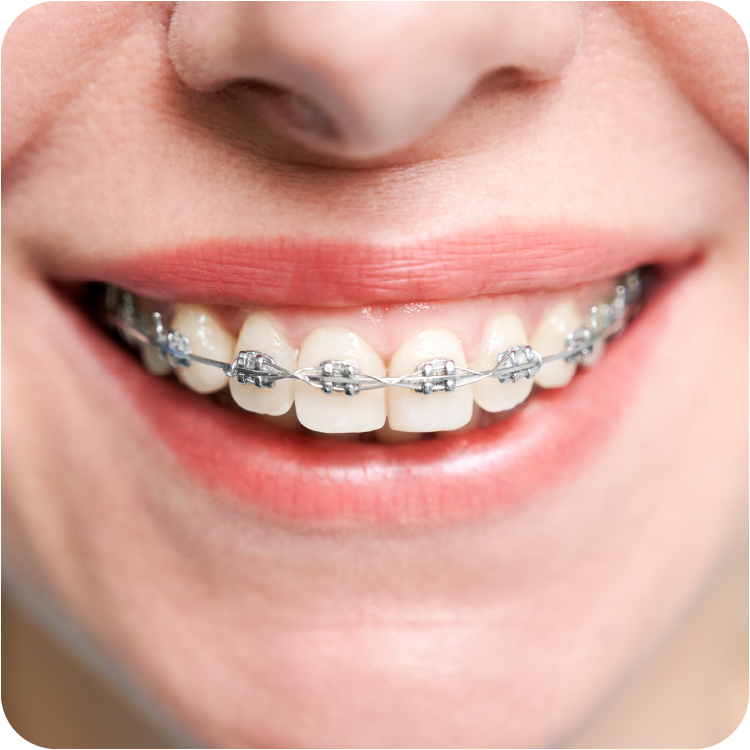
Fixed brackets and wires transmit controlled forces. There is no forgetting to insert them, but deposits can build around brackets and displaced wires or detached brackets may need assessment.
This article discusses decision criteria, not technique. See the clear aligner treatment and metal braces pages for service details.
Decision discussions include:
- Current tooth positions
- Upper and lower bite relationship
- Roots and supporting tissues
- Decay risk and gum health
- Nature of planned tooth movements
- Ability to maintain daily hygiene
- Adherence to removable appliance wear
- Visibility and daily-use expectations
Similar-looking alignment may hide different root positions or bites. Appearance cannot determine suitability; the clinician makes that distinction.
What Are the Main Differences Between Aligners and Braces?
The key difference is delivery of force through removable appliances or a fixed system. This affects discipline, cleaning, meals and visibility. No comparison feature means one option is universally more suitable or superior.
| Comparison criterion | Clear aligners | Braces |
|---|---|---|
| Structure | Removable transparent appliances | Brackets and wires fixed to teeth |
| Daily use | The wearer must maintain the prescribed schedule | The wearer does not remove the system |
| Visibility | May be less noticeable; not completely invisible | Metal braces are visible; visibility varies across systems |
| Cleaning | Teeth are accessible when aligners are removed | Clean separately around brackets and under wires |
| Meals | Removed before eating | Remain in the mouth during meals |
| Damage or disruption | Loss, breakage or poor fit can affect treatment | Detached brackets or displaced wires may need assessment |
| Personal responsibility | Consistent wear is decisive | Care and review routines are decisive |
| Clinical suitability | Determined by examination | Determined by examination |
Transparency does not mean invisibility; some plans use attachments on teeth. Braces are not limited to metal appearance either, but visibility preference cannot be separated from clinical need. See lingual braces for systems placed on inner surfaces.
Removability may ease cleaning but becomes a limitation if wear is inconsistent. Fixed braces eliminate removal and storage needs, but not cleaning difficulty or possible damage.
When May Aligners or Braces Be Considered?
Readers are not expected to diagnose orthodontic conditions or choose treatment themselves. This section helps identify habits and expectations before examination. Suitability follows examination, records and imaging when needed.
When considering aligners
Discuss how a removable appliance fits daily life. Considering these questions may help the appointment:
- Can removal before meals be maintained?
- Are there suitable conditions for cleaning after meals?
- Can the appliance be stored safely?
- Could work, school or travel affect wear?
- Do you know whom to contact if it is lost or does not fit?
These are not a clinical suitability test. Appearance cannot show whether required movements can be managed with aligners; the clinician decides.
When considering braces
Discuss effects on cleaning, eating and daily life. Before examination, note:
- Can a routine for detailed bracket cleaning be established?
- Can protective changes in eating habits be maintained?
- Do you play sports or a wind instrument?
- Are there existing sores, bleeding or sensitivity?
- Do you know what to do with a wire or bracket problem?
Fixed braces do not make treatment independent of the patient. Neglected care, damage or delayed reviews may affect the plan.
| Decision question | Why does it matter in discussion? |
|---|---|
| Can I maintain removable appliance wear? | Allows discussion of compatibility with habits |
| Can I clean after meals? | Shows how aligners fit daily life |
| Can I clean thoroughly around brackets? | Helps understand fixed-appliance care demands |
| What are my visibility expectations? | Clarifies preference; does not replace clinical suitability |
| What oral symptoms do I currently have? | Highlights issues needing separate assessment |
| Do I understand the limitations? | Reminds that neither guarantees results or a trouble-free process |
How Is Treatment Chosen?
Choice is not based only on front-view appearance. Bite, roots, support, hygiene and responsibilities are considered together. Examination, records and imaging when needed define individual limits.
Examination may address:
- Orthodontic need: Alignment and bite are assessed.
- Roots and support: Roots, surrounding bone and gums are examined.
- Oral health: Decay and gum problems are investigated. Gingivitis differs from bone-loss-causing periodontitis; the clinician distinguishes them.
- Wear routine: Discuss whether a removable appliance fits daily life.
- Care capacity: Assess whether required cleaning can be maintained.
- Daily life: Discuss speech, meals, sport, music and social visibility.
- Maintaining results: Explain possible tooth movement and retention needs.
Initial preference may not match clinical needs. This does not make one method generally superior. Planning is individual and different tools may need consideration.
Before examination, note:
- Previous orthodontic treatment
- Retainers used or lost
- Clenching or grinding complaints
- Gum bleeding
- Loose teeth
- Widening gaps between teeth
- Jaw joint pain or locking
- Regular medicines and general health information
- Recent oral or dental treatments
- Work or eating conditions that may affect wear
What Are the Risks and Limitations of Orthodontics?
Even under planned monitoring, aligners and braces are not risk-free. Decay, gum problems, soft tissue irritation, appliance damage, unwanted support changes or renewed movement may occur. Risks vary with oral health, biological response, care and individual conditions.
| Risk or limitation | How may it arise with aligners? | How may it arise with braces? |
|---|---|---|
| Decay and surface changes | Aligners over unclean teeth may retain debris | Deposits around brackets may hinder cleaning |
| Gum problems | Edges may irritate; inadequate care may affect tissues | Deposits around brackets or wires may worsen bleeding or swelling |
| Soft tissue irritation | Aligner edges may bother the tongue or gums | Wires or brackets may injure lips or cheeks |
| Treatment disruption | Inadequate wear, loss or poor fit may affect the plan | Detached brackets, displaced wires or delayed reviews may affect the plan |
| Roots and supporting tissues | Biological response to forces varies individually | Biological response to forces varies individually |
| Maintaining results | Teeth may move again if retention is not maintained | Teeth may move again if retention is not maintained |
| Outcome limits | Not all planned changes may occur to the same extent | Not all planned changes may occur to the same extent |
Root or supporting tissue changes cannot be reliably identified from symptoms at home. Baseline records and reviews help assessment but do not guarantee absence of unwanted effects.
Orthodontic forces may cause pressure or sensitivity. Swelling, discharge, persistent unpleasant taste, increasing pain or tissue injury from the appliance should not be regarded merely as adaptation. Timing of care depends on the finding.
Toothache can mislead. Reduced or absent pain does not mean resolution. When inner tissue loses vitality, pain may cease while infection progresses silently. Assuming assessment is unnecessary because pain has gone is unsafe.
How Are Oral Care and Meals Managed?
Care and meals differ by appliance. Aligners are removed for eating, with hygiene before reinsertion. Braces remain and need separate cleaning around them. Personal decay risk and gums affect care in both methods.
When wearing aligners
- Remove aligners before meals.
- Follow individual instructions for drinks other than water.
- Maintain oral cleaning before reinsertion.
- Clean gently and protect from heat that could distort shape.
- Store removed aligners in a suitable case.
- Tell the clinician about broken, lost or poorly fitting aligners.
- Do not advance to the next aligner independently.
When wearing braces
- Clean around brackets, under wires and along gums carefully.
- Choose interdental tools according to individual anatomy.
- Follow instructions about foods that may damage the appliance.
- Discuss the effects of biting food with front teeth.
- Have displaced wires or detached brackets assessed.
- Do not cut, bend or glue wires yourself.
| Care topic | Clear aligners | Braces |
|---|---|---|
| During meals | Aligner removed | Appliance remains in the mouth |
| Cleaning focus | Teeth and interdental spaces before insertion | Around brackets, under wires and along gums |
| Appliance care | Cleaned separately and stored in a case | Brackets cleaned in the mouth |
| Main disruption | Aligner loss, fracture or poor fit | Bracket detachment, wire displacement or poking |
| Food considerations | Do not eat with aligners in | Limit foods that may damage the appliance |
The American Dental Association describes brushing with fluoride toothpaste twice a day for two minutes. Brushes, interdental tools and technique vary individually. Do not scrape tartar at home; bleeding or deposits should be assessed by a dentist.
How Do Aligners and Braces Affect Daily Life?
They affect speech, meals, visibility, sports and cleaning differently. Removability offers flexibility but requires consistent oversight. Braces remain continuously; food choices, protection and detailed cleaning need a daily routine.
- Speech: Aligners may affect some sounds. With braces, lips or cheeks may need to adapt to new surfaces.
- Meals: Remove aligners before eating. Follow individual protection instructions with braces.
- Social routine: Plan a case and post-meal cleaning for aligners. Braces’ visibility varies by system.
- Sports: A clinician assesses suitable protection for contact-risk activities.
- Music: Wind instruments may alter contact with the appliance. Adaptation varies.
- Travel: Plan transport of aligners, case and tools. Ask beforehand how to handle brace problems.
- Work and school: Consider how meals and cleaning fit the schedule.
Less visible aligners are not necessarily easier. Forgetting wear or lacking cleaning facilities may cause difficulties. Braces need no removal or storage, but care and protection responsibilities remain.
When to Contact Your Doctor
Appliance problems differ in urgency. Signs affecting airway, general health, face or neck need emergency care. Avulsed teeth, appliance damage, increasing pain or non-healing sores may need same-day assessment. None of the following is suitable for waiting.
Call 112 or go to the nearest emergency department immediately
One or more of the following is sufficient:
- Rapidly increasing facial swelling.
- Rapidly increasing swelling beneath the jaw.
- Rapidly increasing neck swelling.
- Difficulty breathing.
- Difficulty swallowing.
- A change in voice.
- Inability to open the mouth.
- Swelling spreading towards the eye.
- Swelling spreading towards the neck.
- Fever with oral or facial swelling.
- Chills with oral or facial swelling.
- General deterioration with oral or facial swelling.
- Bleeding that does not stop despite pressure.
- A change in bite after facial or jaw trauma.
- Inability to move the jaw after facial or jaw trauma.
- Suspected jaw fracture.
- Loss of consciousness after trauma.
- Vomiting after trauma.
- Dizziness after trauma.
Do not wait for an orthodontic review. Difficulty breathing or swallowing, voice change or inability to open the mouth may pose an airway risk; call 112 or attend the nearest emergency department.
Assessment on the same day or without delay
One or more of the following is sufficient:
- A permanent tooth completely knocked out by trauma. Time is critical; do not wait until morning. Do not dry the tooth; hold it by the crown, do not rub the root and do not let it dry during transport.
- Uncertainty whether a completely knocked-out tooth is baby or permanent. Do not delay to distinguish it; seek same-day assessment without manipulating it.
- A broken tooth.
- A cracked tooth.
- A displaced tooth.
- A bump on the gum.
- Discharge on the gum.
- Swelling with a persistent unpleasant taste.
- Swelling with persistent bad breath.
- Toothache interrupting sleep.
- Progressively worsening toothache.
- A filling falling out.
- A crown falling out.
- A bridge falling out.
- An orthodontic wire poking into tissue.
- Injury from an orthodontic wire.
- Detached brackets or displaced wires.
- A non-healing mouth sore lasting longer than two weeks.
- A white patch in the mouth lasting longer than two weeks.
- A red patch in the mouth lasting longer than two weeks.
- An area of firmness in the mouth lasting longer than two weeks.
- Gum bleeding outside brushing.
- Loose teeth.
- Widening gaps between teeth.
- Jaw joint locking.
Cutting, bending or gluing the appliance at home may worsen injury. Do not independently decide which aligner to wear or whether to advance while awaiting assessment.
Questions You Can Ask Your Clinician
Clear questions help understand suitability, care demands and risks as well as visibility. Before deciding, discuss goals, limitations and responsibilities. Answers are tailored to findings and imaging when needed.
- Which movements do my teeth need?
- Which aligner or brace options are clinically possible?
- What are the main limitations of my preferred method?
- How are my gums and bone support for orthodontics?
- Must decay or gum problems be addressed first?
- How will aligner wear be monitored?
- What if an aligner does not fit, breaks or is lost?
- Which bracket or wire problems need same-day care?
- How will suitable care tools be chosen?
- Which risks will be monitored?
- What options exist if planned movements do not occur?
- What is expected of me during retention?
- Do clenching, sports or wind instruments affect the plan?
- Which personal conditions affect maintenance of results?
Duration, reviews and additional tools vary individually. General online comparisons do not replace a personal plan.
Frequently asked questions
This section answers common comparison questions. Answers are general and do not show personal anatomy, roots or bite. Suitability follows examination, necessary records and imaging when needed.
Which is faster: aligners or braces?
Duration depends on more than appliance type. Scope, movements, biological response, health and adherence matter. Wear is important with aligners; care and reviews with braces. An individual estimate can follow examination.
Can aligners treat every orthodontic problem?
Not necessarily. Required movements, roots, bite, jaw and support affect assessment. Braces or other aids may be needed. This cannot be decided at home from photos or visible crowding; clinical assessment is required.
How many hours a day should aligners be worn?
American Association of Orthodontists information describes 20–22 hours daily, with removal for meals and care. Individual instructions follow the plan. Non-adherence may affect fit or monitoring of planned movements.
Which foods should be avoided with braces?
Hard, sticky foods or those loading the appliance directly may damage brackets or wires. How to eat depends on the appliance and personal conditions. If brackets detach or wires shift, do not cut, bend or glue them; seek same-day assessment.
Do aligners and braces affect speech?
Both may affect speech. Aligners can alter some sounds; braces change contact of tongue, lips or cheeks with new surfaces. Adaptation varies. Report ongoing speech difficulty, poor fit or tissue injury at assessment.
Is retention needed after treatment?
Teeth may move again after orthodontics. A removable or fixed retainer may therefore be considered individually. Type and schedule depend on the result, gums and personal conditions. Retention does not guarantee unchanged positions.
Sources
These institutional sources cover general aligner use and home care, not personal instructions. Schedules, tools and plans vary with findings, oral health and the treating clinician’s assessment.
- American Association of Orthodontists — Clear Aligner Therapy (daily wear, adherence and orthodontic follow-up)
- American Dental Association — Home Oral Care (regular fluoride toothpaste brushing and home care)
See the contact page for information about examination and assessment.
This information is for educational purposes and does not replace diagnosis and treatment. Please consult your doctor about your symptoms.