

All-on-4 Implant Treatment
All-on-4 Implant
All-on-4 is a method where a fixed prosthesis is applied over four implants in cases of complete tooth loss. Patient selection, planning stages and the healing process are explained.

Dr. Fırat Karabulut
Dentist · Mecidiyeköy, Istanbul
AI · initial information
onlineLet's discuss your implant treatment

AI answers are for information and do not replace a medical diagnosis.

Short videos on the topic
All videos →Brief explanations on this topic from Dr. Fırat Karabulut's YouTube channel. Total 2 videos.

Where is Our Clinic? Car Park Entrance

Where is our clinic?
Dentist
+30,000
Successful Dental Treatments
With thousands of successful treatment experiences, personalised planning and modern techniques, we create healthy smiles.
What is All-on-4 Implant? Advantages, Process, Healing and Who is it Suitable For?
All-on-4 implant is a modern treatment method developed for patients suffering from complete tooth loss, enabling them to obtain fixed and aesthetic teeth in a short period. This system offers a strong and permanent solution with fewer implants, and has a high success rate when properly planned and appropriate patients are selected. Below, the All-on-4 implant, its advantages, the application process and who it is suitable for are explained in detail.
What is All-on-4 Implant?
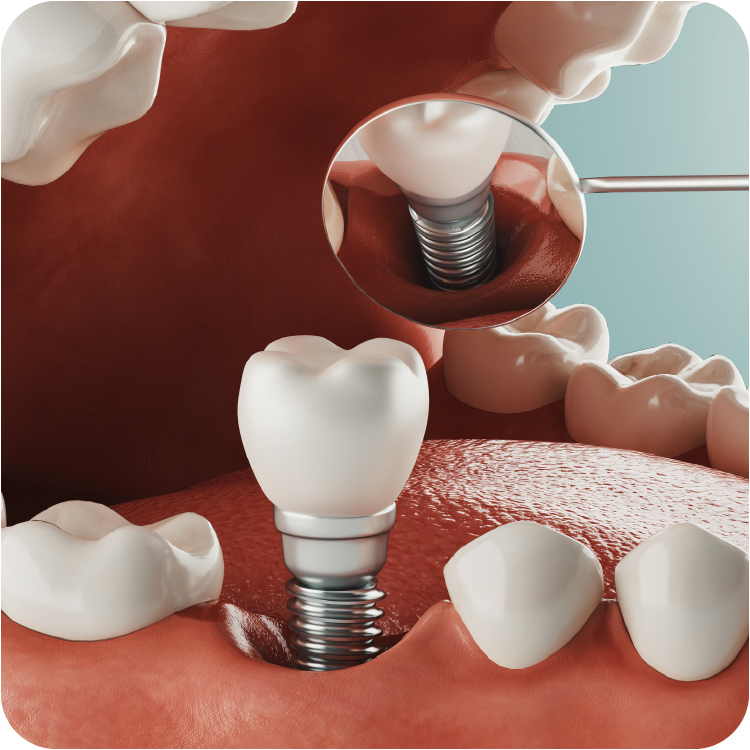
All-on-4 implant is a modern treatment method that allows a fixed bridge prosthesis to be placed on 4 dental implants placed in the lower or upper jaw in cases of complete tooth loss. In this system, the implants in the posterior region are positioned at a specific angle to gain maximum support from the bone, and in most cases, a fixed tooth bridge can be made without the need for advanced surgical procedures.
The All-on-4 technique is especially preferred in patients who have lost all of their teeth or have teeth that need to be extracted. The aim is to obtain fixed and aesthetic teeth in a short time without using a removable denture.
How Does the All-on-4 System Work?
- 4 titanium implants are placed in the jaw.
- The implants in the anterior region are positioned vertically.
- The implants in the posterior region are placed at an angle.
- A fixed bridge prosthesis is applied over these implants.
In suitable patients, a temporary fixed tooth can be attached on the same day. For this reason, the method is also known colloquially as "same-day fixed teeth".
Suitable For Whom?
- Those completely without teeth in the upper or lower jaw
- Those with advanced tooth loss
- Those who do not wish to use a removable denture
- Patients with limited bone volume who do not want a graft
How is All-on-4 Implant Performed?
All-on-4 implant treatment is a procedure that requires detailed planning and is usually completed in a single surgical appointment. The process is planned according to the patient's bone structure, general health status and aesthetic expectations.
Examination and Digital Planning
A clinical examination is performed before treatment and the jaw bone is evaluated using 3D dental imaging. Bone volume, sinus cavities and nerve line are analysed. At this stage, the positioning angles of the implants are planned digitally.
Tooth Extraction (If Necessary)
If there are teeth in the mouth that need to be extracted, they are removed in the same appointment. If there is infection or advanced gum disease, it is treated first.
Placement of Implants
A total of 4 implants are placed in the jaw:
- Two implants in the anterior region vertically
- Two implants in the posterior region at an angle
Because the posterior implants are placed at an angle, maximum support is gained from the bone and in most cases bone grafting may not be necessary.
Same-Day Temporary Fixed Teeth
If adequate bone stability is achieved, a temporary fixed prosthesis can be attached to the implants on the same day. Thus, the patient does not remain without teeth.
Healing and Permanent Prosthesis
The process of the implants fusing with the bone takes an average of 2–3 months. After this period, measurements are taken and a permanent, aesthetic and durable prosthesis is prepared and attached.
All-on-4 implant treatment, when properly planned, is an effective method that enables patients to obtain fixed teeth in a short time. The success of the process is directly related to patient selection, surgical experience and regular follow-ups.
All-on-4 Implant Advantages
The All-on-4 implant system is a frequently chosen treatment method because it offers a fixed and comfortable solution in cases of complete tooth loss. Its main advantages are:
Fixed Teeth with Fewer Implants
Whilst traditional methods require 6–8 implants, the All-on-4 technique allows the entire jaw to be restored with a fixed prosthesis using only 4 implants.
Same-Day Fixed Teeth Option
In suitable patients, a temporary fixed tooth can be attached on the day the implants are placed. The patient does not remain without teeth.
Reduction in Bone Grafting Needs
Because the posterior implants are placed at an angle, patients with limited bone volume often do not require advanced bone grafting procedures.
Shorter Treatment Duration
The surgical and temporary prosthesis phase can usually be completed in a single appointment.
Aesthetic and Natural Appearance
Fixed prostheses provide aesthetic results that closely resemble natural teeth.
Eliminates the Need to Use a Removable Denture
A comfortable alternative for patients who do not wish to wear a complete denture (palatal).
High Success Rate
With proper planning and appropriate patient selection, the success rate is quite high.
All-on-4 Implant Disadvantages
Like any treatment method, All-on-4 implants have certain limitations.
Not Suitable for Everyone
It may not be suitable for individuals with advanced bone loss or serious systemic disease.
Entire Jaw Depends on Single Piece Prosthesis
Because the fixed bridge is one piece, if a problem arises, the system is evaluated as a whole.
Requires Good Oral Hygiene
The area under the fixed prosthesis requires regular cleaning. Otherwise, there is a risk of infection.
Sensitivity in the First Days
Mild pain and swelling may be seen after surgery.
Cost Factor
Initial cost is higher than removable dentures; however, it provides comfort and durability advantages in the long term.
What is the Recovery Process Like?
In All-on-4 implant treatment, soft tissue healing is generally completed within a few days. Mild swelling and sensitivity may be seen in the first 24–72 hours. Most patients can return to daily activities in a short time. The process of implants bonding with bone takes approximately 2–3 months on average. At the end of this period, the permanent prosthesis is fitted.
Who Is It Suitable For?
- Those completely without teeth in the upper or lower jaw
- Patients with multiple teeth requiring extraction
- Those who do not wish to use a removable denture
- Individuals in good general health
- Patients whose bone volume is at a level that does not require extensive grafting
Who Is It Not Suitable For?
- Patients with advanced bone loss requiring additional surgery
- Those with uncontrolled diabetes or serious systemic disease
- Those with active and untreated advanced periodontal disease
- Individuals with poor oral hygiene who cannot maintain regular care
The decision regarding suitability must be made after clinical examination and radiological evaluation.