
Laminate Veneer
Laminate (porcelain veneer) aims to change tooth colour and shape with minimal intervention. Who it is suitable for, the preparation and maintenance process.

Dr. Fırat Karabulut
Dentist · Mecidiyeköy, Istanbul
AI · initial information
onlineLet's talk about your smile

AI answers are for information and do not replace a medical diagnosis.

Short videos on the topic
All videos →Brief explanations on this topic from Dr. Fırat Karabulut's YouTube channel. Total 2 videos.

Where is Our Clinic? Car Park Entrance

Where is our clinic?
Dentist
+30,000
Successful Dental Treatments
With thousands of successful treatment experiences, personalised planning and modern techniques, we create healthy smiles.
What is Laminate (Porcelain Veneer)? How is it Done, Its Advantages, How Long Does it Last?
In aesthetic dentistry, applications performed naturally and with minimal intervention have become increasingly preferred in recent years. Laminate treatment is one of the notable solutions, especially for patients who are dissatisfied with their tooth colour, shape, or minor crowding of the front teeth. Through its thin structure and natural appearance, it provides an aesthetic transformation whilst aiming to preserve tooth structure as much as possible.
What is Laminate (Porcelain Veneer)?
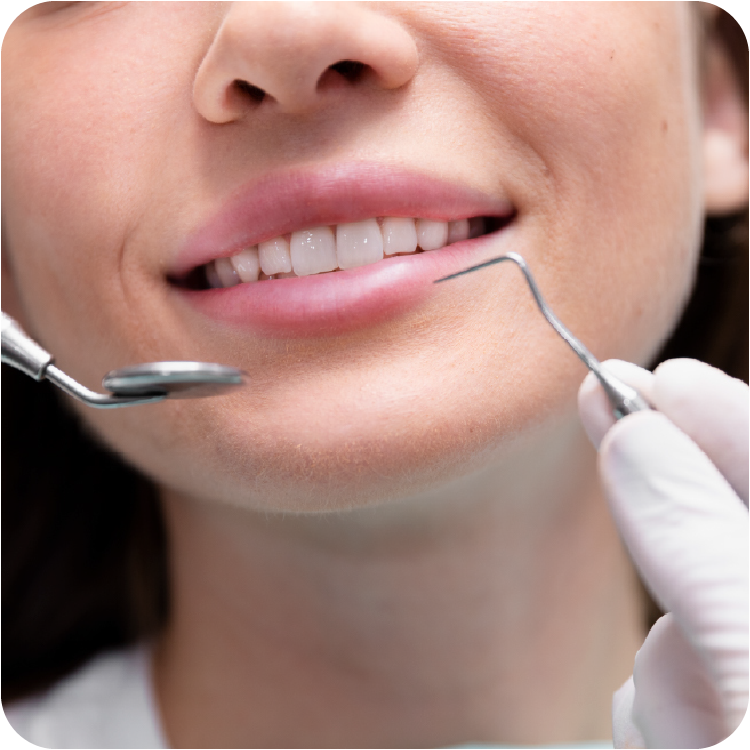
Laminate, also called porcelain veneer, is thin porcelain coverings applied to the front surface of teeth. It is usually applied with minimal abrasion and is bonded only to the front surface of the tooth.
This method is preferred for correcting aesthetic problems such as colour change, shape defect, tooth gap or mild crowding. Its thin and semi-translucent structure provides an aesthetic appearance close to natural tooth appearance.
Laminate application is a frequently preferred treatment option within smile design and has a high patient satisfaction rate aesthetically.
How is Laminate Tooth Done?
Laminate (porcelain veneer) application is a treatment process that begins with aesthetic planning and is completed in several stages. The aim is to preserve tooth structure as much as possible whilst achieving a natural and aesthetic appearance.
A detailed examination is performed in the first stage. The structure of the teeth, bite relationship and gum health are evaluated. Necessary photographs and measurements are taken and aesthetic planning is done. If desired, the likely result can be shown to the patient through digital design before treatment.
During the application stage, very minimal abrasion is performed on the front surface of the teeth. In some suitable cases, it can be applied without any abrasion. Then a precise impression is taken and the veneers are custom-made in the laboratory.
The prepared porcelain veneers are tried on, colour and fit are checked. In the final stage, they are secured to the tooth surface with special adhesive systems.
Once the procedure is complete, the patient gains a natural-looking, aesthetic smile that is harmonious with their face. The success of the process depends on proper planning, quality laboratory work and clinician experience.
How Many Visits Does It Take to Complete?
Laminate (porcelain veneer) treatment is usually completed in several visits. In the first visit, examination, planning and impression-taking are performed. Once the necessary preparations are completed, the laboratory process begins.
In the second visit, the veneers are tried on, colour and fit are checked. In the final visit, they are permanently bonded.
The total time varies depending on the patient's condition and planning, but in most cases can be completed in a short time.
Is the Tooth Cut?
The aim of laminate application is to preserve tooth structure as much as possible. For this reason, usually only the front surface of the teeth receives very minimal abrasion.
In some suitable cases, it can be applied with almost no abrasion. However, depending on the tooth position, existing colour and aesthetic goals, a small preparation may be needed.
How much abrasion will be performed is determined after a detailed examination. The aim is to achieve an aesthetic result whilst preserving the natural tooth structure.
What are the Advantages of Laminate?
Laminate (porcelain veneer) application is one of the methods in aesthetic dentistry that provides results closest to natural appearance. Through its thin structure and light transmission, it mimics natural tooth appearance.
The main advantages are:
Applied with minimal tooth abrasion
Provides natural and aesthetic appearance
High colour stability, does not stain easily over time
Can correct tooth gaps and mild crowding
Ensures a harmonious and symmetrical smile with the face
Can be used for many years with proper care
It is a comfortable and effective solution for patients with high aesthetic expectations.
Does Laminate Have Disadvantages?
Like any aesthetic application, laminate treatment may have some limitations.
May not be sufficient alone in severe crowding
Careful planning is required in patients with very strong bite force
Use of a protective night guard may be recommended for people with teeth grinding habits
Cost may vary compared to some other types of covering
These risks can be minimised with appropriate patient selection and proper planning. The suitability of laminate treatment must always be determined after a detailed examination.
How Long Does Laminate Last?
Laminate (porcelain veneer) applications can be used for many years with proper planning and regular maintenance. The durability period depends on the patient's oral hygiene, bite habits and regular dental check-ups.
Veneers applied with quality materials and proper bonding techniques are long-lasting. However, habits such as teeth grinding, nail biting and biting hard objects can negatively affect their lifespan. In such cases, a protective night guard may be recommended.
With regular maintenance and check-ups, veneers can maintain their aesthetic and functional properties for a long time.
Do Laminates Fall Off?
Laminates (thin porcelain veneers) are securely bonded to the tooth surface using special adhesive systems. When applied with proper planning and appropriate technique, they are not expected to fall off spontaneously.
However, the following situations may increase the risk:
Tooth clenching or grinding habits
Biting on hard objects
Trauma
Inappropriate bonding technique
For patients with teeth clenching habits, night splint use is recommended. With regular check-ups and proper care, laminates can be used safely for many years.
Laminate or Zirconia?
Laminate and zirconia crown are selected based on different aesthetic needs.
Laminate is a thin porcelain coating applied to the front surface of teeth. It requires minimal tooth reduction and aims for the most natural aesthetic appearance. It is typically preferred for correction of colour and shape in the anterior region.
A zirconia crown is a restoration that covers the entire surface of the tooth. It is more durable and is used for teeth with significant material loss or in situations where stronger support is needed.
In summary:
If aesthetics are the priority and minimal intervention is desired, choose laminate
If greater durability and extensive coverage are required, zirconia may be preferred
The most appropriate choice is determined by evaluating the tooth structure and aesthetic expectations.
Who Are Laminates Suitable For?
Laminate (thin porcelain veneer) treatment is particularly suitable for patients seeking aesthetic improvement in the anterior tooth region. It provides successful results in those wishing to achieve a natural and symmetrical smile with minimal intervention.
Can be preferred in the following situations:
Those unhappy with tooth colour
Patients with spacing (diastema) between front teeth
Those with mild crowding or shape irregularities
Those with chipped, worn or small tooth structure
Those wishing for a more aesthetic and proportionate smile
Can be planned in adult patients with good general oral health and no gingival problems.
Who Are Laminates Not Suitable For?
As with any aesthetic procedure, laminates may not be recommended in certain situations, or different treatments may be required first.
Careful assessment is required in the following cases:
Patients with severe crowding
Those with severe teeth clenching or grinding habits
Those with active gingival disease
Teeth with extensive loss of tooth structure
Those with inadequate oral hygiene
In these situations, basic treatments should be planned first or alternative restoration options should be considered. The most appropriate decision is made after detailed clinical examination.