

Flapless Implant Treatment
Sutureless Implant
In flapless implants, a wide incision is not made in the gum; bleeding and swelling are usually minimal. How the method is applied and who it is suitable for.

Dr. Fırat Karabulut
Dentist · Mecidiyeköy, Istanbul
AI · initial information
onlineLet's discuss your implant treatment

AI answers are for information and do not replace a medical diagnosis.

Short videos on the topic
All videos →Brief explanations on this topic from Dr. Fırat Karabulut's YouTube channel. Total 2 videos.

Where is Our Clinic? Car Park Entrance

Where is our clinic?
Dentist
+30,000
Successful Dental Treatments
With thousands of successful treatment experiences, personalised planning and modern techniques, we create healthy smiles.
What is Flapless Implant? Its Advantages, Healing Process and Who It Is Suitable For
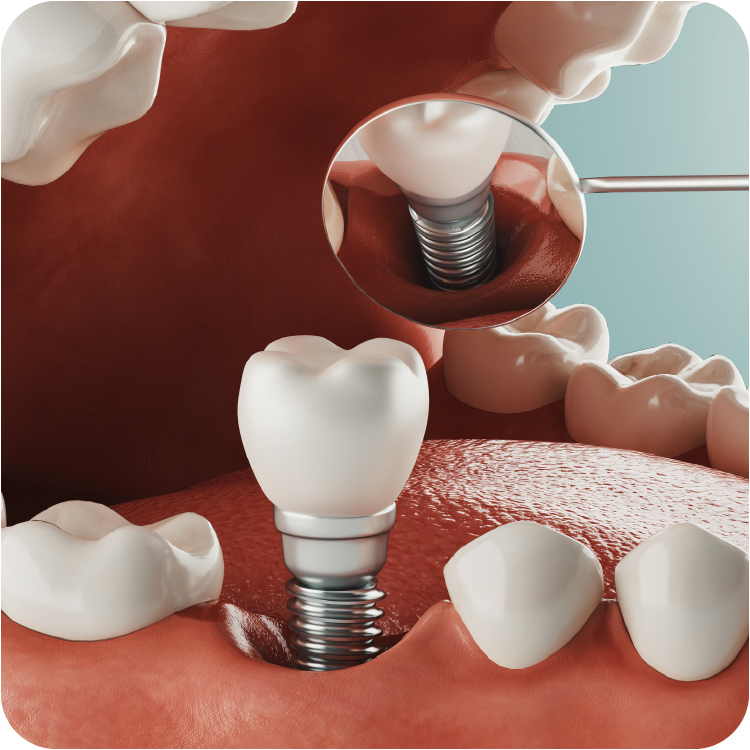
Flapless implant is the placement of an implant without making a wide incision in the gum as in classical methods, using special surgical techniques. In this method, stitches are usually not required, bleeding and swelling are minimal, and the healing process is more comfortable. In suitable patients, implant placement may be possible on the same day.
How is Flapless Implant Performed?
Flapless implant treatment usually consists of the following stages:
Examination and 3D Tomography (CBCT)
- Bone volume and density are assessed.
- The area where the implant will be placed is planned in millimetre precision.
Digital Planning
- The angle and depth of the implant are determined.
- If necessary, a surgical guide is prepared.
Application Without Incision
- A small access opening is made in the gum.
- The implant is placed within the bone.
- In most cases, no stitches are required.
Temporary Tooth (In Suitable Patients)
- A temporary tooth can be attached on the same day in aesthetic areas.
- The procedure usually takes 15–30 minutes.
What Are the Differences Between Flapless Implant and Classical Implant?
In dental implant treatment, the surgical technique used varies depending on the patient's bone structure, gum condition and planned treatment. The two most commonly compared methods are flapless implant and classical implant placement. Both methods have the same goal: to create a permanent tooth root by placing a titanium implant to replace a missing tooth. However, there are important differences in the application method and healing process.
Surgical Application Method
In classical implant method, the gum is opened with a scalpel and the implant is placed with direct visibility of the bone surface. After the procedure, the gum is closed again and stitches are applied.
In the flapless implant method, the gum is not opened widely. A small access point is created and the implant is placed directly within the bone. In most cases, stitches are not required.
Suturing and Incision Status
- Classical implant has stitches.
- Flapless implant usually has no stitches.
This directly affects the healing comfort.
Swelling and Oedema
In the classical method, as the gum tissue is raised, mild swelling and bruising may be seen after the operation.
In flapless implantation, since tissue trauma is minimal, swelling is generally minimal.
Healing Time
In both methods, the time for the implant to fuse with the bone (osseointegration) is on average 2–3 months. However:
- In flapless implantation, soft tissue healing is faster.
- In classical implantation, suture removal and tissue healing may take somewhat longer.
Suitability Criteria
Flapless implantation cannot be applied to every patient. For this method:
- Bone volume must be adequate
- Bone density must be appropriate
- Advanced surgical planning is required
In patients with significant bone loss, the classical method may be safer.
Field of View and Control
In classical implantation, the dentist works while viewing the bone directly.
In flapless implantation, the procedure is usually guided by 3D tomography and digital planning.
Which Is Better?
It is not actually a matter of which method is "better", but which method is more suitable for the patient that is important.
- If the bone structure is suitable and minimal trauma is desired → flapless implantation has advantages.
- If there is bone loss or advanced surgery is required → classical implantation may be preferred.
Both methods have high success rates when proper planning is carried out.
What Are the Advantages of Flapless Implant?
Flapless implantation (flapless implant) is a modern implant method applied without extensively opening the gum tissue. In suitable patients, it provides significant advantages both in terms of surgical comfort and healing process.
Less Tissue Trauma
Since the gum tissue is not fully raised as in the classical method, the surrounding tissues are less affected. This increases comfort after the operation.
Less Bleeding
Since the incision area is minimal, bleeding during and after the procedure is generally less.
Less Swelling and Oedema
Since tissue involvement is limited, swelling and bruising are less pronounced compared to the classical implant method.
More Comfortable Healing Process
In most cases, since no sutures are placed:
- Suture removal is not necessary
- There is less feeling of tension
- Return to daily activities happens more quickly
Shorter Procedure Time
In patients with suitable bone structure, single implant placement can generally be completed within 15–30 minutes.
Advantage in Aesthetic Areas
Particularly in the front tooth region, it can help preserve gum contour. This is important in terms of aesthetic outcome.
Temporary Tooth Application on the Same Day
In patients with adequate bone structure, a temporary tooth can be placed on the day of implant placement. This is an important advantage, particularly for patients concerned about aesthetics.
Quick Return to Daily Life
Thanks to minimal surgical intervention, patients can often return to their normal lives in a short time.
Who Can Have a Flapless Implant?
Flapless implant treatment is a method that can be safely applied to patients with suitable bone structure and good general health. However, it is not suitable for every patient. Therefore, the decision should be made after detailed examination and 3D imaging (CT scan).
Those With Adequate Bone Volume
For flapless implant treatment to be possible, there must be adequate bone width and height in the area where the implant will be placed. In patients with advanced bone loss, the conventional method may be preferred.
Individuals With Good General Health
Individuals without systemic disease, or with systemic disease that is under control, are suitable for this treatment.
Patients With Controlled Diabetes
Implant treatment can be applied in diabetic patients whose blood glucose is stable. However, the risk may increase if diabetes is uncontrolled.
People Who Smoke Minimally or Have Quit
Smoking can adversely affect the implant's osseointegration process. People who do not smoke or who reduce smoking during treatment are better candidates.
Patients With Good Oral Hygiene
Regular oral care is essential for implants to have a long lifespan. The success rate is higher in individuals with good gum health.
Those With Single or Limited Tooth Loss
If bone structure is suitable, flapless implants are highly advantageous for single tooth gaps. In appropriate cases, temporary teeth can be applied on the same day.
Who Is It Not Suitable For?
- Those with advanced bone loss
- Patients with uncontrolled diabetes
- Those with active and advanced gum disease
- Individuals with severely compromised immune systems
In conclusion, the suitability of flapless implants is individual-specific. The correct decision is made after clinical examination and radiological evaluation.
How Long Does the Procedure Take?
Flapless implant application is completed in a very short time in suitable cases. Placing a single implant generally takes 15–30 minutes.
If multiple implants are to be placed, the procedure time may increase. If temporary teeth are planned for the same day, the operation time may be slightly longer. However, compared to conventional implant methods, the operating time is usually shorter.
How Long Does the Recovery Process Take?
In flapless implantation, soft tissue healing is faster because the gum is not widely opened.
- First 24 hours: There may be mild sensitivity.
- 2–3 days: Minimal swelling may occur.
- 3–7 days: Full return to daily activities is achieved.
However, the implant's osseointegration process (fusion with bone) takes an average of 2–3 months. During this period, the implant becomes biologically integrated with the bone and ready for permanent restoration.
Will There Be Pain and Swelling?
The procedure is performed under local anaesthesia, so no pain is felt during the operation.
After the operation:
- There may be mild pain or sensitivity.
- Swelling is generally less than with conventional implant methods.
- Most patients manage the process comfortably with simple painkillers.
Pain and swelling vary from person to person. When proper planning and suitable patient selection are done, the recovery process is generally comfortable.