

Implant Care and Check-ups
Implant Care and Check-ups
The ability to use implants for many years depends on regular care and check-ups. Daily cleaning, check-up frequency and gum health around the implant.

Dr. Fırat Karabulut
Dentist · Mecidiyeköy, Istanbul
AI · initial information
onlineLet's discuss your implant treatment

AI answers are for information and do not replace a medical diagnosis.

Short videos on the topic
All videos →Brief explanations on this topic from Dr. Fırat Karabulut's YouTube channel. Total 2 videos.

Where is Our Clinic? Car Park Entrance

Where is our clinic?
Dentist
+30,000
Successful Dental Treatments
With thousands of successful treatment experiences, personalised planning and modern techniques, we create healthy smiles.
Implant Care and Check-up Guide: Home Care and Long-term Use
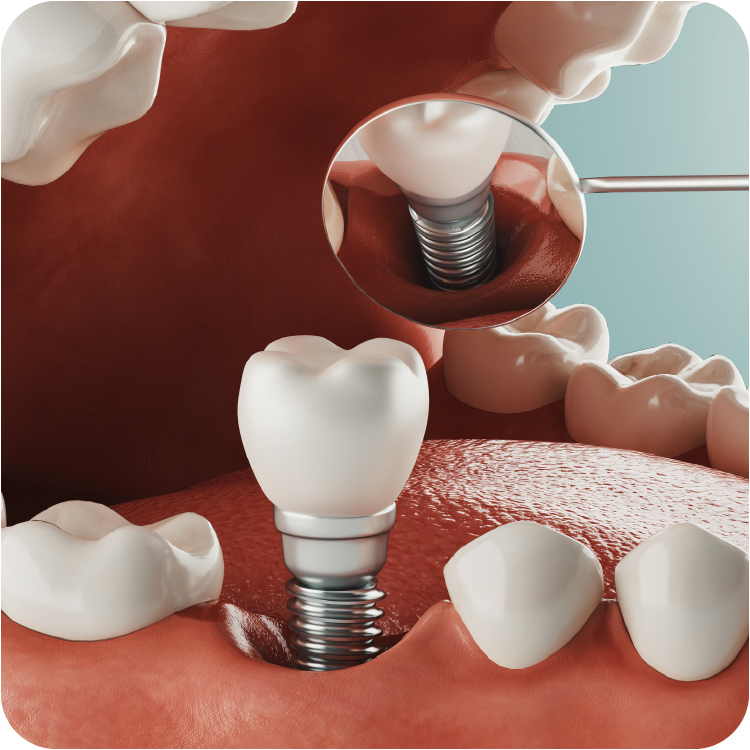
Dental implants offer long-lasting and fixed solutions to replace missing teeth. However, for an implant to be successfully used for years, it depends not only on correct surgical application, but also on regular maintenance and check-ups afterwards. For the gum and bone tissue surrounding the implant to remain healthy, daily care must be performed correctly at home, and professional cleaning and dental check-ups must not be neglected at specific intervals. Below you will find detailed information on how implant care should be performed, the importance of clinical check-ups and recommendations to help extend implant longevity.
What Happens If Implant Care Is Neglected? Why Are Regular Check-ups Essential?
Although dental implants are designed as long-lasting solutions, serious problems can develop if maintenance is neglected. Although the implant itself is an artificial material, the gum and bone tissue surrounding it is living and susceptible to bacteria. Insufficient cleaning can gradually lead to plaque accumulation around the implant and an inflammatory process.
As this condition progresses, an infection called periimplantitis can develop and bone loss can occur. A reduction in bone support can cause the implant to loosen and even be lost.
Through regular care and dental check-ups:
Tissues around the implant remain healthy
Early-stage problems are detected
Infection risk is kept under control
Implant lifespan is extended
The success of implant treatment is not protected by surgery alone, but by regular maintenance and check-up habits shown afterwards.
How Should Implant Care Be Performed at Home?
Although implants look like natural teeth, the gum tissue surrounding them is living and requires regular care. Correct cleaning habits at home are the most important step for an implant to have a long lifespan.
Daily care should be as follows:
Brush your teeth at least twice a day: A soft-bristled toothbrush should be used. The area around the implant should be cleaned gently.
Use of dental floss or interdental brush: To prevent plaque accumulation in the area between the implant and gum, special implant floss or interdental brushes should be preferred.
Oral irrigator: It can be particularly useful for cleaning the lower areas, especially in bridge-type implant prostheses.
Antibacterial rinse: Products recommended by the dentist should be used.
Brushing too hard or using unsuitable products can damage the gums. For this reason, the cleaning products used should be selected according to your dentist's recommendations.
How Often Should Clinical Implant Check-ups Be Performed?
Regular dental check-ups are of great importance after the implant is placed. Closer monitoring is usually recommended in the first year. Subsequently, for most patients:
A routine check-up every 6 months is recommended.
Patients with risk factors (such as smoking, diabetes, history of gum disease) may have check-ups planned more frequently.
During clinical check-ups:
The area around the implant is evaluated
Gum health is checked
Professional cleaning is performed if necessary
Bone level is monitored with X-rays
Through regular check-ups, problems that may develop in the early stages are noticed and the implant is kept healthy for many years.
What Are the Signs of Implant Inflammation?
Inflammation developing around the implant can progress to bone loss and even implant loss if not noticed in the early stages. This condition is generally called periimplantitis.
The most common signs are:
Redness and swelling of the gums
Bleeding While Brushing
Sensitivity or pain around the implant
Bad breath
Inflamed discharge
In advanced cases, slight mobility in the implant
If any of these signs are observed, a dentist should be consulted without delay. Early intervention ensures the preservation of the implant.
How Long Is the Lifespan of an Implant?
Dental implants are long-lasting treatment options. With proper planning, appropriate surgical application and regular care, implants can be used without problems for many years.
Factors affecting implant lifespan include:
Level of oral hygiene
Regular clinical check-ups
Smoking
Systemic diseases such as diabetes
Chewing force and teeth clenching habits
With proper care and monitoring, implants can provide a long-term and permanent solution.
What Are Common Mistakes in Implant Care?
Proper care is essential for an implant to have a long lifespan. However, some common mistakes can lead to problems around the implant.
The most common mistakes are:
Not using dental floss or interdental brush
Cleaning only the visible tooth surfaces
Neglecting regular dental check-ups
Continuing to smoke
Using hard and incorrect brushing techniques
Neglecting oral hygiene
These mistakes can gradually lead to plaque accumulation, gum inflammation and bone loss. To preserve implant health, both at-home care and regular professional check-ups must be carried out together.