
Healing Process After Implant Placement
The healing process after implant placement; expected symptoms, diet, oral care, check-ups, and findings requiring emergency evaluation are explained.

Contents 12
- 01What Is the Healing Process After Implant Placement?
- 02How Are Healing Stages Assessed?
- 03What Findings May Occur Early On?
- 04How Are Pain, Swelling and Bleeding Interpreted?
- 05What Is Implant–Bone Integration?
- 06What Should You Consider in Oral Care?
- 07How Should Eating Be Managed?
- 08How Are Follow-up Appointments and Return to Daily Activities Planned?
- 09When to Contact Your Doctor
- 10Questions You Can Ask Your Clinician
- 11Frequently asked questions
- 12Sources
Implant healing is the period when surgical tissues recover and a biological connection develops between implant and jawbone. Closed-looking gums do not mean bone healing is complete. The course depends on health, bone, procedure extent and hygiene.
Summary: Implant recovery is individual and includes soft tissue healing and bone integration. Early tenderness, limited swelling or mild oozing may occur; a dentist judges whether they are expected. Rapid swelling, breathing difficulty or bleeding despite pressure requires emergency assessment. Reduced pain alone does not prove resolution. Follow-up depends on examination, individual conditions and imaging when needed.
What Is the Healing Process After Implant Placement?
Healing is more than closure of the visible wound: soft tissue repair, bone remodelling and a healthy tissue barrier progress at different rates. Appearance, absence of pain or elapsed time alone cannot show whether the implant is ready for use.
The main biological phases assessed are:
- Early tissue response: A clot and temporary healing tissue form at the surgical site.
- Soft tissue repair: Gum margins recover and protective tissue develops.
- Bone formation: New bone develops around the implant.
- Functional assessment: Implant stability and surrounding tissues are examined.
- Long-term follow-up: Hygiene, gum health and cleanability of the restoration are monitored.
Recovery varies after every invasive procedure. Bone biology may continue in an externally calm-looking area. Planned reviews are therefore not needed only when pain, bleeding or swelling occurs.
How Are Healing Stages Assessed?
Healing stages do not have fixed dates. Early reviews focus on wound integrity; later reviews assess soft tissues, bone connection, hygiene and stability. Progression is guided by findings, procedure extent and imaging when needed, not the calendar alone.
| Stage | What is assessed | Important limitation |
|---|---|---|
| Early period | Bleeding, swelling, tenderness and wound integrity | Symptoms’ appearance alone does not establish diagnosis |
| Soft tissue repair | Gum margins, sutures and cleaning difficulties | Gum closure does not mean bone healing is complete |
| Bone integration | Stability and surrounding bone appearance | Elapsed time alone does not determine decisions |
| Before the final restoration | Readiness for chewing load and surrounding tissues | Not every implant becomes ready at the same time |
| Long term | Plaque control, gums and prosthesis cleaning | The need for regular care continues |
Procedure extent, additional surgery, tobacco and health may affect follow-up. Patients are not expected to rank these factors themselves; clinical assessment determines readiness for the next stage.
What Findings May Occur Early On?
Mild oozing, tenderness, tightness or limited swelling may occur early. These do not alone mean complications, but normal healing and conditions needing assessment cannot reliably be distinguished at home. Onset, changes and the surgical site must be considered together.
Slightly pink saliva and bleeding that continues despite pressure have different urgency. Local surgical swelling is assessed differently from swelling rapidly spreading towards the face or neck. The dentist distinguishes these using history and examination.
Improvement, recurrence or spread of symptoms provides useful information. Recording changes may help, but should not be used for home diagnosis or delaying care.
An implant has no dental pulp, yet pain relief does not prove that surrounding infection, tissue or mechanical problems have resolved. Do not cancel a planned assessment simply because pain disappears.
How Are Pain, Swelling and Bleeding Interpreted?
One symptom or photo cannot determine their meaning. Onset, direction of change, surgical appearance and examination are considered together. Recurrent pain, discharge or growing swelling needs assessment before the scheduled review date.
| Observed change | Safe approach |
|---|---|
| Reduced tenderness | May be consistent with healing; not a definitive assessment |
| Subsiding swelling | May be favourable but does not remove the need for review |
| Pain returning after improvement | Dental assessment is needed |
| A bump or discharge on the gum | Same-day assessment is needed |
| Bleeding that continues despite pressure | Call 112 immediately or attend the nearest emergency department |
| Rapidly growing swelling of the face, beneath the jaw or neck | Call 112 immediately or attend the nearest emergency department |
If an implant or restoration feels mobile, do not try to identify the source at home. Pushing with a finger or tongue may irritate tissue. The dentist determines whether movement comes from the implant, connector or restoration.
What Is Implant–Bone Integration?
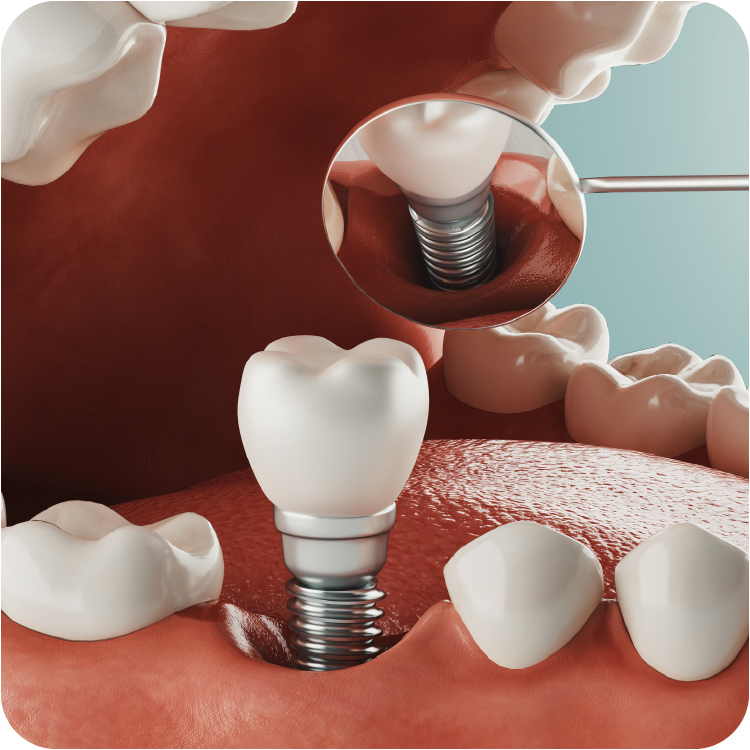
Osseointegration is a functional connection between the implant surface and living bone. Initial mechanical retention differs from later biological integration. Absence of pain, gum closure or elapsed time alone cannot establish its adequacy.
Bone remodels around the implant during integration. Timing varies and no fixed schedule or outcome is guaranteed. Bone, site, additional surgery, hygiene, tobacco and systemic health may affect assessment.
A meta-analysis of smoking, radiotherapy, diabetes and osteoporosis in relation to implant loss shows these variables cannot be interpreted identically. Pooled findings alone do not establish an individual’s risk or outcome.
Readiness for the restoration depends on stability and tissue findings. Long-term cleaning and follow-up, distinct from technical placement stages, are covered on the implant care and review page.
What Should You Consider in Oral Care?
The key is maintaining hygiene while protecting the surgical site. Tool type and timing of contact with the implant area are not identical for everyone. Sutures, additional procedures and findings determine individual care limits.
Clarify the following care points:
- How to clean untreated teeth
- When the surgical site can be touched
- Which assessment is needed before interdental cleaning
- Whether a care product is needed
- Whom to contact if bleeding or discharge occurs
- How tobacco may affect the individual recovery plan
| Care area | Early question | Later assessment |
|---|---|---|
| Toothbrushing | Limits on contact with the surgical site | Transition to cleaning around the implant |
| Interdental care | Appropriate timing at the treatment site | A tool suited to restoration shape |
| Mouthwash | Whether individual instructions exist | Reassessment of need |
| Professional review | Wound and hygiene status | Regular monitoring around the implant |
Follow the individual aftercare instructions. Cleaning harder does not speed healing, and choosing products or tools yourself does not replace examination.
How Should Eating Be Managed?
Eating decisions focus on protecting the site and safe chewing. Numbness, procedure extent, a temporary restoration and comfort are considered. No fixed day or food list applies to everyone returning to normal eating.
Individual dietary instructions can clarify:
- Safe eating time while numbness persists
- How food texture affects the surgical site
- How to protect the site during chewing
- Whether a temporary restoration changes food choices
- Effects of alcohol or tobacco on individual circumstances
- Which findings determine return to usual eating
The American Dental Association’s MouthHealthy resource notes that soft foods may be preferred during healing. This does not replace personal instructions. Pain, movement or new symptoms during chewing requires assessment.
How Are Follow-up Appointments and Return to Daily Activities Planned?
Reviews assess wound integrity, hygiene, tissues and stability, not only sutures. Return to work, exercise or usual chewing is individual. New or increasing symptoms should not wait until the scheduled date.
Reviews may address:
- Course of bleeding, swelling and tenderness
- Wound margin condition
- Changes involving sutures
- Soft tissues around the implant
- Difficulties with daily cleaning
- Implant stability
- Radiological imaging when needed
- Readiness for the restoration
- Long-term care needs
Note onset, changes and effects on daily function before review. Give complete information about medicines and illnesses. Do not independently change the treatment plan or prescription.
Implant lifespan cannot be guaranteed. Long-term condition depends on hygiene, bone and gum health, reviews, tobacco, clenching and general health.
When to Contact Your Doctor
Some findings need immediate emergency help, others same-day dental assessment. One or more of the following is enough; do not wait for all. Trying to identify the cause at home or waiting for the review date is unsafe.
Call 112 Immediately or Attend the Nearest Emergency Department
- Rapidly increasing facial swelling.
- Rapidly increasing swelling beneath the jaw.
- Rapidly increasing neck swelling.
- Difficulty breathing.
- Difficulty swallowing.
- A change in voice.
- Inability to open the mouth. This poses an airway risk; do not wait.
- Swelling spreading towards the eye.
- Swelling spreading towards the neck.
- Fever.
- Chills.
- Deterioration in general condition.
- Bleeding that does not stop despite pressure.
- Bite change after facial or jaw trauma.
- Inability to move the jaw after facial or jaw trauma.
- Loss of consciousness after trauma.
- Vomiting after trauma.
- Dizziness after trauma.
Same-Day or Prompt Dental Assessment
- Uncertainty whether a completely knocked-out tooth is permanent.
- A permanent tooth completely knocked out by trauma. Time is critical; do not wait until morning. Do not dry the tooth; hold it by the crown, do not rub the root and do not let it dry during transport.
- A broken tooth.
- A cracked tooth.
- A displaced tooth.
- A bump on the gum.
- Discharge on the gum.
- Oral swelling with a persistent unpleasant taste or smell.
- Toothache that interrupts sleep.
- Progressively worsening toothache.
- A filling falling out.
- A crown falling out.
- A bridge falling out.
- An orthodontic wire poking into tissue.
- Injury from an orthodontic wire.
- A non-healing mouth sore lasting longer than two weeks.
- A white patch in the mouth lasting longer than two weeks.
- A red patch in the mouth lasting longer than two weeks.
- An area of firmness in the mouth lasting longer than two weeks.
- Gum bleeding outside brushing.
- Loose teeth.
- Widening gaps between teeth.
- Jaw joint locking.
This general safety list also includes signs unrelated to implant healing. It does not classify them as implant complications but helps ensure the appropriate level of care is recognised if they occur.
Questions You Can Ask Your Clinician
Questions help explain individual healing and clarify later decisions. The aim is to learn expected progress, care limits, reasons for reviews and when to seek help, not diagnose from online information. Adapt questions to the procedure and health.
- Which symptoms can be expected after my procedure?
- Which changes mean I should not wait for the review date?
- When and with what tool can I touch the surgical area?
- What type of sutures do I have, and do they need removal?
- Which findings will guide changes to eating?
- How will stability be assessed?
- When might imaging be needed?
- How could tobacco affect my healing?
- Do my medicines change follow-up?
- Do my systemic illnesses change follow-up?
- What conditions are needed before the restoration?
- Which tools will suit long-term cleaning?
- If I feel movement, how will its source be distinguished?
Suitability, review frequency and the next stage depend on examination and imaging when needed. Planning is individual; people with similar procedures may have different care and review needs.
Frequently asked questions
These general answers do not replace individual examination or allow symptoms to be classified at home. Pain relief does not prove complete resolution. Expected progress, care and review timing depend on personal clinical findings.
How long does pain last after implant placement?
Duration and intensity depend on procedure extent, individual healing and accompanying procedures. Reducing tenderness may fit healing, but pain relief does not prove resolution. Returning, increasing or sleep-interrupting pain needs same-day assessment.
When does swelling decrease after implant placement?
The course varies with the person and procedure; there is no fixed day. The dentist distinguishes a tissue response from changes needing assessment. Rapidly growing face, under-jaw or neck swelling requires calling 112 immediately or emergency attendance.
When can I eat after implant placement?
Timing depends on numbness, the site and personal instructions. While numb, you may unknowingly bite the lip, tongue or cheek. Initial texture and temperature are planned according to procedure extent. There is no universal schedule for normal eating.
When can teeth be brushed after implant placement?
Continue cleaning untreated teeth while following site-protection instructions. Brush contact at the implant varies with the wound, sutures and additional procedures. Harder brushing does not speed healing. Appropriate brushing and interdental timing are explained at review.
When are implant sutures removed?
Removal depends on suture type and healing. Some dissolve, others are removed at review; no fixed day applies to everyone. If a suture loosens or wound margins change, do not pull it; request assessment.
How long does implant–bone integration take?
Osseointegration progresses biologically in stages, with timing varying individually. Cleveland Clinic’s dental implant information notes that it may take months. Time alone does not establish adequacy; stability is assessed by examination and imaging when needed.
Do smoking and alcohol affect healing?
Tobacco may impair wound healing and tissue health around implants. Alcohol may also need individual assessment in early recovery or with medicines. Management should not follow a generic timetable; the dentist should assess health, procedure extent and medicines.
Sources
The sources below give general implant, healing and osseointegration information. Timelines and research results do not guarantee individual outcomes. Decisions depend on health, procedure extent, findings and imaging when needed. Administrative rules from foreign sources do not directly apply in Türkiye.
- Cleveland Clinic — Dental Implants (patient information on healing and bone integration)
- American Dental Association — MouthHealthy: Implants (patient information on eating and osseointegration)
- Chen H. et al. — Smoking, Radiotherapy, Diabetes and Osteoporosis as Risk Factors for Dental Implant Failure: A Meta-Analysis, PLoS One, 2013
See the contact page for information about examination and assessment.
This information is for educational purposes and does not replace diagnosis and treatment. Please consult your doctor about your symptoms.