
What Happens If Missing Teeth Are Not Treated
Effects of missing teeth on oral health, chewing, adjacent teeth, and jaw bone, along with evaluation and treatment options.

Contents 11
- 01What Happens If Missing Teeth Are Not Treated
- 02How Does a Missing Tooth Affect the Mouth and Jaw?
- 03How Are Chewing, Speech and Appearance Affected?
- 04How Is a Missing Tooth Assessed?
- 05What Are the Options for Replacing Missing Teeth?
- 06How Do Implants, Bridges and Removable Dentures Compare?
- 07How Are Treatment Timing and Daily Care Planned?
- 08When to Contact Your Doctor
- 09Questions You Can Ask Your Clinician
- 10Frequently asked questions
- 11References
A missing tooth is a permanent tooth absent from birth, extracted or lost through trauma. The gap may initially seem cosmetic, but chewing, tooth positions, bite, hygiene and surrounding jawbone can change over time.
Summary: A missing tooth can alter contact and force balance. Neighbours may move into the gap, the opposing tooth may shift and local bone may remodel. No symptoms does not mean no effect. Implant-supported restorations, bridges and removable dentures have different support and limitations. Suitability is determined by examination and imaging when needed.
What Happens If Missing Teeth Are Not Treated
Without replacement, contacts around a gap may change, remaining teeth may bear more chewing load and alveolar bone may remodel. Progression differs. Location, bite, gum health, care and individual anatomy determine the extent of change.
Main possible changes include:
- Neighbouring teeth may tilt or rotate towards the gap.
- The opposing tooth may change position.
- Contact points may be disrupted.
- New areas that are difficult to clean may develop.
- Chewing loads may be shared by fewer teeth.
- Bone volume and shape in the gap may change.
- A habit of chewing on one side may develop.
Pathological tooth migration means movement away from normal positions. It is discussed particularly in periodontitis and should not be interpreted as specific to a missing-tooth gap (PMID 15948679 — Pathologic tooth migration, 2005). Retrospective research on movement of adjacent and opposing teeth after upper first molar loss shows that movement around gaps may warrant clinical assessment (PMID 37496294 — Adjacent tooth migration after maxillary first molar loss in patients with sinus augmentation: A retrospective research, 2023).
A painless gap does not prove assessment is unnecessary. Relief from decay- or infection-related pain that led to tooth loss also does not mean resolution. Pulp necrosis may stop pain while infection progresses silently. The dentist distinguishes these situations.
How Does a Missing Tooth Affect the Mouth and Jaw?
A missing tooth may change support for neighbours and opposing chewing contacts. Bone around the root can remodel in response to new loading. Even if only a gap is visible, tooth inclination, contact points, bite and cleanability need separate assessment.
Alveolar bone constantly renews through removal of old tissue and formation of new tissue. Changed mechanical stimulation after tooth loss may affect volume and shape. Osteoclasts’ role is reviewed in PMID 35757898 — Roles of osteoclasts in alveolar bone remodeling (2022).
| Change | Why does it matter? | How is it assessed? |
|---|---|---|
| Movement of neighbouring teeth | May narrow the gap and make cleaning harder | Clinical examination and oral records |
| Movement of the opposing tooth | May affect bite contacts | Bite assessment |
| Bone remodelling | May affect later treatment planning | Radiological imaging when needed |
| New contact areas | May encourage food trapping | Examination of teeth and gums |
| Changed load distribution | May transfer different forces to remaining teeth | Chewing and bite analysis |
Appearance at home cannot establish whether these changes exist or their extent. A wide-looking gap, aligned neighbouring teeth or no symptoms is insufficient for decisions. The dentist assesses relationships between tooth position, bone and bite.
How Are Chewing, Speech and Appearance Affected?
Daily effects depend on whether the gap is anterior or posterior and the condition of remaining teeth. Front tooth loss may be more apparent in biting, speech or smile appearance. Back tooth loss can affect food breakdown and load distribution.
| Missing-tooth area | Possible daily effects | Assessment consideration |
|---|---|---|
| Front region | Difficulty biting, changes in some sounds, visible gap | Smile line, bite and speech |
| Premolars | Difficulty breaking down food | Support of neighbouring teeth |
| Molars | Reduced grinding, one-sided chewing | Posterior contacts |
| Multiple regions | Restricted food choices, altered facial support | Distribution of remaining teeth |
Chewing function is not explained by tooth count alone. NHANES research examined functional tooth units and depression in older adults (PMID 38987924 — Association between masticatory function and depression in older adults: Results from NHANES 2009 to 2018). Findings cannot be directly generalised to other ages or all health indicators.
A narrative review of tooth loss in Nigeria also discusses chewing effects (PMID 36126389 — Tooth Loss: The Nigerian Experience - A Narrative Review, 2022). These publications do not establish individual diagnosis; experienced functional loss is interpreted alongside examination findings.
How Is a Missing Tooth Assessed?
Assessment goes beyond gap width to consider cause, neighbouring positions, gums, bite, bone, hygiene and general health together. Imaging needs differ; methods are selected according to clinical findings.
Assessment may cover:
- Whether the tooth was congenitally absent
- History of extraction, decay or trauma
- Decay, fillings or crowns on neighbouring teeth
- Condition of gum tissues
- Location of the gap
- Contact between upper and lower teeth
- Jawbone structure
- Medicines and general health
- Tobacco use
- Ability to maintain daily care
A panoramic radiograph gives a two-dimensional jaw overview. Three-dimensional imaging may be considered in selected cases needing detailed bone assessment. Not every gap needs the same imaging; the dentist decides and interprets findings.
The dental check-up page explains general examination of a gap and surrounding tissues together.
What Are the Options for Replacing Missing Teeth?
Options include implant-supported restorations, tooth-supported bridges or removable dentures. They are not direct equivalents: support, daily use, care and limitations differ. Choice depends on clinical findings, health and sustainable care.
-
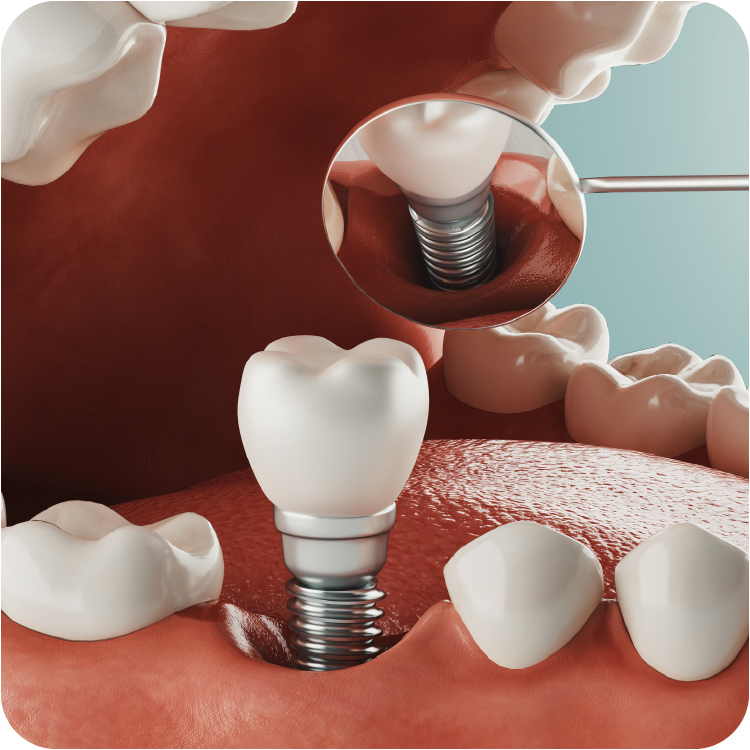
Implant-supported restoration: Supported by an implant in the jawbone. It may avoid preparing adjacent teeth as bridge supports, but involves surgery. Bone, oral tissues, health and individual risks require assessment. Results cannot be guaranteed.
-
Tooth-supported bridge: Usually a fixed option supported by teeth around the gap. Surgery may not be needed, but supporting teeth may require preparation. Their roots, fillings, crowns and surrounding tissues affect planning.
-
Removable denture: Can be removed and inserted by the wearer and considered for multiple missing teeth. Retention depends on oral tissues and distribution of remaining teeth. It needs regular cleaning and fit checks (PMID 32940586 — Removable Partial Dentures for Older Adults, 2020).
Implant placement is surgery. Infection, bleeding, effects on adjacent structures, healing problems or failure of expected bone integration are assessed individually. Different placement and loading approaches are reviewed in PMID 30328194 — Implant placement and loading protocols in partially edentulous patients: A systematic review (2018).
How Do Implants, Bridges and Removable Dentures Compare?
Implants rely on bone, conventional bridges on neighbouring teeth, and removable dentures on remaining teeth and oral tissues. Implants need surgical assessment; bridges may require tooth preparation. Removable dentures are taken out for cleaning. Appearance or tooth count alone cannot determine suitability; planning is individual.
| Criterion | Implant-supported tooth | Conventional bridge | Removable denture |
|---|---|---|---|
| Source of support | Implant in the jawbone | Neighbouring teeth | Remaining teeth and oral tissues |
| Mode of use | Fixed | Fixed | Removable |
| Surgery | Required | Usually not required | Usually not required |
| Neighbouring teeth | May not need preparation as bridge supports | May need preparation | May be involved with retaining components |
| Cleaning | The area around the implant is cleaned separately | The area beneath the bridge is cleaned | Also cleaned outside the mouth |
| Main limitation | Dependence on bone and health conditions | Dependence on supporting teeth | Retention and adjustment needs |
No precise individual lifespan can be given. Restoration and supporting tissue condition depend on hygiene, bone and gum health, check-ups, chewing loads and personal factors. Initial appearance alone cannot guarantee longevity or outcomes.
How Are Treatment Timing and Daily Care Planned?
Do not postpone assessment just because the gap is painless. Yet elapsed time alone does not determine a method. Neighbouring teeth, bone, gums, bite and health are assessed together. Care protects tissues but does not treat the gap or guarantee prevention of future changes.
Daily care aims to protect remaining teeth and tissues around the gap:
- Brush regularly with fluoride toothpaste.
- Clean between teeth with suitable tools.
- Remove food deposits around the gap during daily care.
- If wearing a removable denture, maintain cleaning of both oral tissues and the denture.
- Set review intervals according to individual risks.
Product and interdental tool choice depends on oral anatomy. Homemade or uncontrolled temporary materials used to fill the gap may injure tissue, enter the airway or worsen the condition. A dentist should assess the need for a temporary restoration.
When to Contact Your Doctor
A missing tooth usually needs planned assessment, but infection, persistent bleeding or trauma can change urgency. One or more warning signs below is enough; do not wait for all. Immediate emergency signs and conditions needing prompt assessment are considered separately.
Call 112 or go to the nearest emergency department immediately
- Rapidly increasing facial swelling.
- Rapidly increasing swelling beneath the jaw.
- Rapidly increasing neck swelling.
- Difficulty breathing.
- Difficulty swallowing.
- A change in voice.
- Inability to open the mouth.
- Swelling spreading towards the eye.
- Swelling spreading towards the neck.
- Fever.
- Chills.
- Deterioration in general condition.
- Bleeding that does not stop despite pressure.
- A change in bite after facial or jaw trauma.
- Inability to move the jaw after facial or jaw trauma.
- Suspected jaw fracture.
- Loss of consciousness after trauma.
- Vomiting after trauma.
- Dizziness after trauma.
Assessment on the same day or without delay
- A permanent tooth completely knocked out by trauma. Do not wait until morning. Do not dry it; hold the crown, do not rub the root and prevent drying during transport. If unsure whether it is baby or permanent, seek prompt assessment without trying to decide at home.
- A broken tooth.
- A cracked tooth.
- A displaced tooth.
- A bump on the gum.
- Discharge on the gum.
- Swelling with a persistent unpleasant taste in the mouth.
- Swelling with persistent oral odour.
- Toothache interrupting sleep.
- Progressively worsening toothache.
- A filling falling out.
- A crown falling out.
- A bridge falling out.
- An orthodontic wire poking into tissue.
- Injury from an orthodontic wire.
- A non-healing mouth sore lasting longer than two weeks.
- A white patch in the mouth lasting longer than two weeks.
- A red patch in the mouth lasting longer than two weeks.
- An area of firmness in the mouth lasting longer than two weeks.
- Gum bleeding unrelated to brushing.
- Loose teeth.
- Widening gaps between teeth.
- Jaw joint locking.
Questions You Can Ask Your Clinician
Questions about the cause, surrounding tissues and personal limitations help decisions. The aim is to understand why options are suitable, not request one method. Answers should rely on examination, history and imaging when needed.
- What is the condition of bone and gums around the gap?
- Is there movement or support loss in neighbouring teeth?
- Which options can be considered in my circumstances?
- What are the main benefits and limitations of each?
- If surgery is considered, what are my risks?
- Do neighbouring teeth need preparation?
- How will daily cleaning of the chosen option be maintained?
- Which personal risks will determine follow-up?
- Which changes could affect planning if treatment is delayed?
- Do my illnesses or medicines alter the plan?
Frequently asked questions
Common questions concern effects of the gap and choosing a method. General information helps explain options but does not establish suitability. Even with the same number missing, people differ in neighbouring teeth, bone, bite, care capacity and health.
What happens if one tooth is missing?
One missing tooth may alter chewing contacts, allow neighbours to move into the gap and change the opposing tooth’s position. Bone may remodel. Looking at the gap alone cannot show these changes; the dentist determines them by examination and imaging when needed.
What should I do if two teeth are missing?
Assess gap locations, neighbouring support, bite, gums and bone. Implant-supported restorations, bridges or removable dentures may be considered. No method suits everyone; an individual plan follows examination and imaging when needed.
What problems can missing teeth cause?
Missing teeth may affect load distribution, speech, appearance and hygiene. Neighbours may move, contacts change, food collect and bone remodel. The degree varies. No symptoms or pain does not mean these changes are absent.
Can a bridge replace three missing teeth?
Gap length alone cannot determine this. Supporting roots, surrounding bone levels, tooth positions and load capacity are assessed. Implant-supported or removable options may also be considered. The suitable method is determined individually after examination.
Is there a temporary solution for a missing tooth?
Temporary fixed or removable restorations may be considered in selected cases. They do not replace definitive treatment or guarantee prevention of later changes. A dentist must plan them for tissue safety and safe use. Do not put homemade materials in the gap.
Can missing teeth cause facial collapse?
Loss of many teeth may reduce lip or cheek support, and bone changes can affect appearance. However, facial collapse cannot be attributed to one cause. Individual conclusions require joint assessment of missing-tooth distribution, bone, soft tissues and personal features.
How Is a Congenitally Missing Tooth Treated?
Options may include orthodontic space management, tooth-supported restorations or implants when development permits. Decisions depend on jaw growth, bite, gap location, neighbouring tooth shape and bone. Suitability follows examination and imaging when needed.
References
The publications below informed the general framework of biological processes and options. Their research topics and populations differ. They do not establish individual diagnosis, suitability or guaranteed outcomes; findings must be interpreted with examination and personal health conditions.
- Pathologic tooth migration, 2005. PMID 15948679.
- Roles of osteoclasts in alveolar bone remodeling, 2022. PMID 35757898.
- Adjacent tooth migration after maxillary first molar loss in patients with sinus augmentation: A retrospective research, 2023. PMID 37496294.
- Association between masticatory function and depression in older adults: Results from NHANES 2009 to 2018. PMID 38987924.
- Tooth Loss: The Nigerian Experience - A Narrative Review, 2022. PMID 36126389.
- Implant placement and loading protocols in partially edentulous patients: A systematic review, 2018. PMID 30328194.
- Removable Partial Dentures for Older Adults, 2020. PMID 32940586.
This information is for educational purposes and does not replace diagnosis and treatment. Please consult your doctor about your symptoms.