
Tooth Brushing and Flossing Routine
The sequence and frequency of tooth brushing and flossing, correct application steps, and points to note in oral care are explained.

Contents 12
- 01What Is a Brushing and Flossing Routine?
- 02How Often and for How Long Should You Brush?
- 03How Should You Brush Your Teeth Correctly?
- 04How Is Dental Floss Used?
- 05Should You Floss or Brush First?
- 06How Should You Choose a Toothbrush, Toothpaste and Interdental Tool?
- 07What Are Common Oral Care Mistakes?
- 08How Should Symptoms Noticed During Care Be Assessed?
- 09When to Contact Your Doctor
- 10How Should You Prepare for the Examination and What Should You Ask?
- 11References
- 12Frequently asked questions
A brushing and flossing routine is a daily oral care regimen aimed at regularly removing bacterial plaque from tooth surfaces and between teeth. Brushing cleans the broad visible surfaces, while floss or another suitable interdental tool complements cleaning where bristles cannot adequately reach.
Summary: A brushing and flossing routine is preventive oral care that regularly cleans teeth and the spaces between them. Brush with fluoride toothpaste twice a day for about two minutes without excessive pressure. Clean between teeth every day with floss or another tool suited to your mouth. Tool selection may vary with tooth spacing, gum condition, implants, bridges and orthodontic appliances. Bleeding, swelling, persistent bad breath, loose teeth or pain requires dental assessment rather than merely a change in care habits.
Regular care helps reduce the risk of decay and gum disease, but does not replace examination. Gingivitis and periodontitis, which can cause bone loss, are different conditions that cannot be distinguished at home. Similarly, sensitivity, decay, cracks or pulp problems can cause similar symptoms; the dentist makes the distinction.
What Is a Brushing and Flossing Routine?
A brushing and flossing routine cleans different oral surfaces with complementary tools. A brush reaches the outer, inner and chewing surfaces of teeth; floss targets the surfaces between teeth that touch. The aim is regular, controlled plaque removal, not vigorous scrubbing.
The main components of this care are:
- Toothbrush: Mechanically removes plaque from broad tooth surfaces and the gum margin.
- Dental floss: Cleans surfaces between tightly contacting teeth where bristles cannot adequately reach.
- Interdental brush: May be used in wider spaces, beneath some bridges or around restorations where it is judged suitable.
- Fluoride toothpaste: Helps protect enamel against acids and supports remineralisation.
- Consistency: Helps prevent plaque from remaining on surfaces for long periods and hardening into tartar.
Brushing and flossing are not alternatives to each other. Brushing alone may leave plaque between contact points. Flossing alone does not adequately clean the broad surfaces of teeth.
Even with good daily care, tartar cannot be removed at home. Do not scrape hardened deposits yourself if you have tartar, gum bleeding or bad breath. The appropriate approach is determined after clinical examination; information on preventive checks is available on the dental check-up page.
How Often and for How Long Should You Brush?
Brush with fluoride toothpaste twice a day for about two minutes each time. This is a general guide for systematically reaching all tooth surfaces. Individual care frequency may differ with gum health, dry mouth, restorations or orthodontic appliances.
The American Dental Association supports brushing twice daily for about two minutes with fluoride toothpaste and cleaning between teeth every day. This approach aims to establish a sustainable routine rather than lengthy but irregular cleaning. (ADA)
When establishing a daily routine, consider the following:
- Morning brushing: Helps remove overnight plaque and start the day with a clean mouth.
- Night-time brushing: Removes plaque and food debris accumulated during the day before bedtime.
- Brushing duration: Time alone does not indicate adequate cleaning. Cleaning the same area for two minutes does not compensate for missing other surfaces.
- Brushing frequency: More frequent brushing does not always mean better cleaning. Excessive pressure and uncontrolled repetition may injure gums or contribute to tooth wear.
- After acidic foods or drinks: Discuss brushing timing with your dentist, considering what you consumed, dry mouth and individual decay risk.
Reminders, timers or following a fixed sequence in the mouth can help sustain the routine. However, completing the time in an app does not guarantee correct pressure or access to all surfaces.
How Should You Brush Your Teeth Correctly?
Correct brushing cleans all surfaces, including the gumline, with light pressure and short, controlled movements. Although the angle and movement may vary with oral anatomy, avoid vigorous horizontal scrubbing. Dexterity, gum recession, brackets or restorations may require a personalised technique.
A systematic brushing routine can be organised as follows:
- Start at the same point each time.
- Brush the outer surfaces of the upper and lower teeth in sequence.
- Clean the inner surfaces facing the tongue without skipping them.
- Reach the grooves on molar chewing surfaces with controlled movements.
- Use gentle movements along the junction between teeth and gums.
- Remember the back surfaces of the rearmost teeth.
- The tongue surface may be cleaned gently without injuring tissue.
Cleaning the gumline does not mean pressing the brush into the gums. Extra force does not remove plaque more effectively. Bristles splaying quickly may suggest that pressure needs reviewing, but do not alone prove oral damage.
If you notice gum recession, sensitivity or wear, simply changing to a harder or softer brush is not an appropriate way to try to solve the problem. Different factors may cause the symptoms. The dentist makes this distinction.
How Is Dental Floss Used?
Floss is guided between two teeth in a controlled way to clean each neighbouring side surface separately. Do not snap it into the gum or simply pass it through the gap and pull it out. For effective cleaning, gently guide it to follow the side surface of each tooth.
The basic sequence is:
- Prepare a clean length of floss that you can control.
- Hold the floss between your thumbs and index fingers, leaving a short working section.
- Guide it between two teeth with small, controlled movements.
- First rest it against the side of one tooth and move it along the tooth’s contour.
- Clean the neighbouring tooth surface separately in the same gap.
- Use a clean section of floss for each new gap.
- Include the exposed back surfaces of the rearmost teeth.
Forcing floss into the gums can cause cuts, pain or bleeding. Passing it only through the contact point may not adequately remove plaque from tooth surfaces. Designs such as floss holders may be considered according to dexterity and tooth alignment.
Floss repeatedly catching, fraying or breaking in one area may require clinical assessment of the surface. The cause cannot be established at home. Have the dentist assess the area rather than forcing the floss through.
Should You Floss or Brush First?
Flossing before brushing may be preferred to loosen interdental plaque for removal during subsequent brushing. However, daily care reaching all necessary surfaces matters more than sequence. If another order is easier to sustain, do not abandon care solely because of the order.
For those who prefer flossing first, the general sequence is:
- Clean between teeth with an appropriate tool.
- Remove the loosened debris from the mouth.
- Brush systematically with fluoride toothpaste.
- Spit out excess toothpaste.
A small crossover study reported that flossing before brushing may benefit interdental plaque control and fluoride retention in these areas. With limited participants, this does not establish definite superiority or guarantee results for everyone. (Mazhari et al., Journal of Periodontology, 2018 — PMID 29741239)
Reversing the order does not mean care is ineffective. The main issue is occasional flossing or consistently missing some gaps. Recurrent bleeding, pain, swelling or catching during flossing requires assessment of oral health and technique before considering sequence.
How Should You Choose a Toothbrush, Toothpaste and Interdental Tool?
Choose tools that reach the relevant surfaces without injuring gums. A soft-bristled brush that is easy to manoeuvre is a suitable starting point for most adults. Floss or interdental brush selection depends on gap width, restorations, brackets and dexterity.
Toothbrush features to consider
- Bristles: Soft bristles support cleaning at the gum margin when used with control.
- Head size: Should allow access to back areas and easy manoeuvring in the mouth.
- Handle design: Should help you grip the brush without slipping or applying unnecessary force.
- Manual or electric: Either can be used with appropriate technique. A timer or pressure alert may help some people but does not alone guarantee correct cleaning.
- Replacement: Replace the brush when bristles splay, bend or lose their shape.
Toothpaste features to consider
Age-appropriate fluoride toothpaste supports decay prevention in daily care. For children, the amount and formulation should be considered according to age. Young children should avoid swallowing toothpaste, and brushing should be supervised by a parent.
Products labelled whitening, for sensitivity or for gum care do not target the same problem. The cause of sensitivity cannot be determined from the symptoms alone. Simply changing products therefore cannot establish a diagnosis. Do not whiten teeth at home with abrasive or acidic substances.
Comparison of interdental tools
| Oral condition | Tool to consider | Limitations and points to consider |
|---|---|---|
| Teeth with tight contacts | Dental floss or dental tape | Do not snap floss into the gums; clean both tooth surfaces separately |
| Wider interdental spaces | An appropriately sized interdental brush | Too large may injure tissue; too small may not provide enough contact |
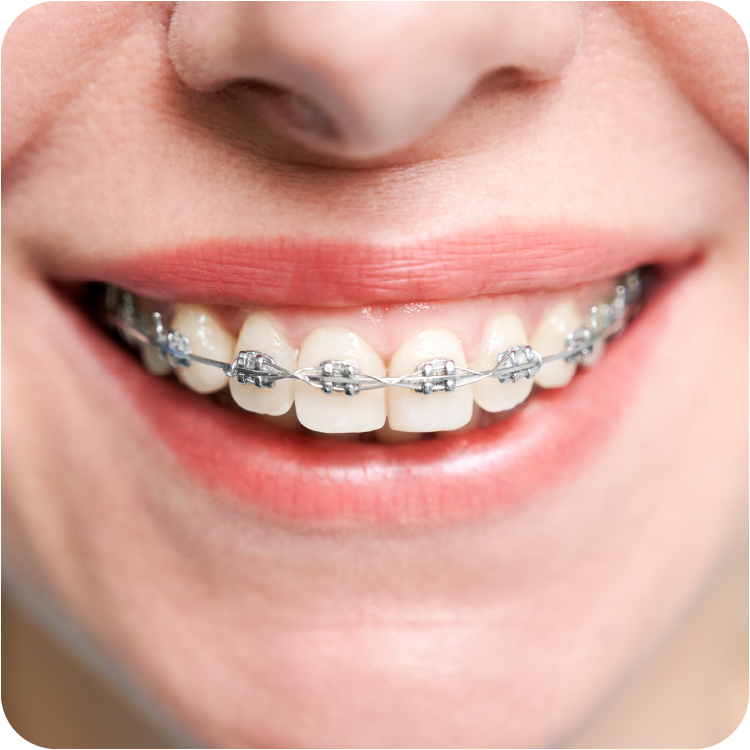
| Around brackets or fixed wires | An interdental tool suited to the orthodontic appliance | One tool may not reach all surfaces around the wire |
| Under bridges or connected restorations | Threadable floss or a suitable interdental tool | Individual technique should be demonstrated according to restoration design |
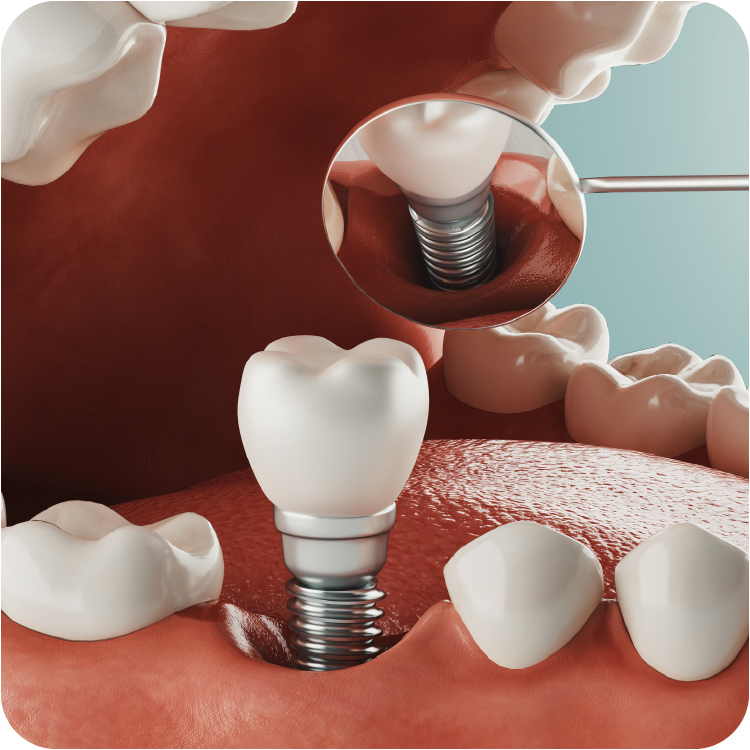
| Around implants | Controlled interdental cleaning suited to the surface | Tool and size should be selected according to the gum structure around the implant |
| Limited dexterity | A handled or ergonomic cleaning tool | Ease of use does not mean all necessary surfaces are reached |
Not all gaps in one mouth are equally wide, so more than one size or tool may be needed. Establishing suitability through clinical examination helps prevent irritation from the wrong size and inadequate cleaning.
What Are Common Oral Care Mistakes?
Common mistakes include excessive pressure, brushing only visible surfaces, skipping interdental cleaning and stopping care entirely when bleeding occurs. These habits can leave plaque in some areas or injure tissues. Persistent symptoms should not be attributed solely to technique and should be assessed by a dentist.
Common mistakes include:
- Pressing too hard: Extra force does not clean better and may contribute to gum irritation and surface wear.
- Brushing randomly: Missing different areas each time can leave plaque, especially on the inner surfaces of back teeth.
- Cleaning only the front surfaces: Tongue-facing surfaces, chewing grooves and the rearmost teeth also need care.
- Skipping between teeth: Bristles cannot reach all surfaces below tight contact points.
- Snapping floss into the gums: Uncontrolled movement may injure tissue and cause bleeding.
- Forcing an unsuitable interdental brush: Do not force the tool into a gap. The dentist determines the appropriate size.
- Using a worn brush: Bent bristles may not contact surfaces evenly.
- Stopping cleaning because of bleeding: Bleeding can have different causes. Examination should determine the cause of recurrent bleeding.
- Sharing a toothbrush: A toothbrush is a personal care item and must not be shared.
- Removing tartar at home: Sharp or pointed tools can damage gums, tooth surfaces and restorations.
- Mistaking relief from pain for healing: Toothache can be misleading. When pulp loses vitality, pain may lessen or stop while infection progresses silently. It is unsafe to assume an examination is unnecessary because pain has gone.
Spitting out excess toothpaste after brushing and avoiding an immediate rinse with plenty of water may help retain fluoride in the mouth. England’s preventive oral health guidance also supports this approach. (Delivering Better Oral Health, Chapter 9)
How Should Symptoms Noticed During Care Be Assessed?
Bleeding, sensitivity, bad breath or floss catching may be noticed during care, but these signs cannot be matched to a specific disease at home. The same symptom may arise through different mechanisms. Note when it began and how it changes, but diagnosis requires clinical examination and, when needed, radiological imaging.
| Observed condition | Information to note without diagnosing | Safe next step |
|---|---|---|
| Bleeding While Brushing | Where it occurs, whether it happens outside brushing and whether it recurs | Dental assessment if it recurs |
| Sensitivity to hot or cold | Which tooth is affected, when it started and how it changes | Report it at an examination without trying to identify the cause at home |
| Persistent bad breath | At what times of day it is noticed and whether dry mouth is present | Assessment if it persists despite oral care |
| Floss repeatedly catching | Which gap catches the floss and whether it frays or breaks | Have the area assessed without forcing the floss |
| A bump or discharge on the gum | Where and when it was noticed | Dental assessment the same day |
| Tooth mobility or widening gaps | Which tooth is affected and whether there has been recent trauma | Assessment without delay |
Early gum inflammation may be reversible, whereas periodontitis can cause loss of the bone supporting teeth. These are different conditions. The amount or colour of bleeding cannot distinguish them at home.
Similarly, tooth sensitivity is not synonymous with decay. Changes in sensitivity can be useful history for the dentist, but it is unsafe to diagnose yourself from these features.
When to Contact Your Doctor
Some signs noticed during oral care need a scheduled examination, while others require same-day assessment or emergency care. One or more warning signs below are enough; do not wait for all of them. Attempts to treat symptoms at home or wait for pain to pass should not delay seeking care.
Call 112 or go to the nearest emergency department immediately
One or more of the following signs is sufficient:
- Rapidly increasing facial swelling.
- Rapidly increasing swelling beneath the jaw.
- Rapidly increasing neck swelling.
- Difficulty breathing. This poses an airway risk; do not wait.
- Difficulty swallowing. This poses an airway risk; do not wait.
- A change in voice. This poses an airway risk; do not wait.
- Inability to open the mouth. This poses an airway risk; do not wait.
- Swelling spreading towards the eye.
- Swelling spreading towards the neck.
- Fever.
- Chills.
- Deterioration in general condition.
- Bleeding that does not stop despite pressure, including after tooth extraction.
- A change in the bite after facial or jaw trauma.
- Inability to move the jaw after facial or jaw trauma.
- Suspected jaw fracture.
- Loss of consciousness after trauma.
- Vomiting after trauma.
- Dizziness after trauma.
Loss of consciousness, vomiting or dizziness after trauma means the event should not be regarded only as a dental injury; emergency medical care is needed to assess for head injury.
Dental assessment the same day or without delay
One or more of the following signs is sufficient:
- A permanent tooth completely knocked out by trauma. Time is critical; do not wait until morning. Do not dry the tooth; hold it by the crown, do not rub the root and do not let it dry during transport.
- Uncertainty whether a knocked-out tooth is a baby or permanent tooth. Seek assessment the same day rather than trying to distinguish them at home.
- A broken tooth.
- A cracked tooth.
- A displaced tooth.
- A bump on the gum.
- Discharge on the gum.
- Swelling with a persistent unpleasant taste in the mouth.
- Swelling with persistent bad breath.
- Toothache interrupting sleep.
- Progressively worsening toothache.
- A filling falling out.
- A crown falling out.
- A bridge falling out.
- An orthodontic wire poking into tissue.
- An orthodontic wire injuring oral tissues.
- A non-healing mouth sore lasting longer than two weeks.
- A white patch in the mouth lasting longer than two weeks.
- A red patch in the mouth lasting longer than two weeks.
- An area of firmness in the mouth lasting longer than two weeks.
- Gum bleeding outside brushing.
- Loose teeth.
- Widening gaps between teeth.
- Jaw joint locking.
Reduced or completely resolved toothache does not mean the problem is gone. Pain may stop when pulp loses vitality, while infection progresses. Assessment remains necessary even if pain that previously interrupted sleep or progressively increased stops on its own.
How Should You Prepare for the Examination and What Should You Ask?
Before the examination, note the types of care tools used, when symptoms began and where they recur. The aim is to provide accurate information for clinical assessment, not to diagnose yourself. Existing restorations, implants, orthodontic appliances and general health may affect your individual care plan.
Prepare the following information before the visit:
- Daily brushing and interdental cleaning routine
- Whether the brush is manual or electric
- Where floss, interdental brushes or other tools are used
- When bleeding, sensitivity, swelling, bad breath or pain began
- Whether symptoms recur in the same area
- Areas where floss catches or the brush seems unable to reach
- Existing implants, bridges, crowns or orthodontic appliances
- Dry mouth and regularly used medicines
- Any previously recommended personal oral care routine
Questions to ask your dentist
- Am I applying appropriate pressure when brushing?
- Which movements best reach the gumline in my mouth?
- Can I use the same cleaning tool in every gap?
- If I need an interdental brush, how is its size determined?
- Which areas might I be missing around bridges, implants or brackets?
- Is recurrent bleeding solely due to technique, or do my gums need assessment?
- Are further investigations needed to determine the cause of sensitivity?
- How should my review interval be determined according to my risks?
- Which finding during my care routine requires assessment the same day?
Planning is individual. A brush, interdental tool or routine suitable for someone else may not suit a different oral anatomy. Choosing tools through clinical examination supports effective care with controlled contact on tissues.
References
The general care framework here draws on professional guidelines and scientific assessments. Sources do not provide an individual diagnosis or replace examination. For people with gum disease, implants, bridges, orthodontic appliances or dry mouth, care tools require additional assessment according to clinical conditions.
- American Dental Association. Home Care. General recommendations on brushing with fluoride toothpaste twice daily for about two minutes and cleaning between teeth every day. — ADA oral care guide
- Public Health England and Department of Health and Social Care. Delivering Better Oral Health: An Evidence-Based Toolkit for Prevention, 4th edition, 2021. Fluoride toothpaste and daily preventive care. — Delivering Better Oral Health, Chapter 9
- Worthington HV et al. Cochrane Oral Health, 2019. Systematic review of interdental cleaning tools used alongside brushing. PMID 30968949. The review reports possible benefits alongside limited certainty of evidence. — PubMed record
- Mazhari et al. Journal of Periodontology, 2018. Crossover study assessing the order of flossing and brushing. PMID 29741239. As a small study, its findings cannot be interpreted as definitive results or superiority for everyone. — PubMed record
- American Dental Association. Brushing Your Teeth. Patient information on bristles, daily interdental cleaning and replacing a worn brush. — ADA MouthHealthy
Frequently asked questions
This section briefly explains common decisions in daily oral care. The answers are general information and do not determine the cause of bleeding, pain, swelling, sensitivity or bad breath. Clinical assessment is needed to distinguish symptoms and choose suitable care tools.
How many times a day should teeth be brushed?
Brush twice daily with fluoride toothpaste, following a systematic sequence that reaches every surface. Making one session at night helps remove the day’s plaque. With gum disease, dry mouth, implants or orthodontic appliances, the personal routine may change following dental assessment.
How long should brushing take?
Brushing should take about two minutes, but duration alone does not indicate adequate cleaning. Clean the outer, inner and chewing surfaces and the gum margin systematically. Longer or harder brushing does not guarantee better results and can contribute to tissue injury.
Should floss be used every day?
Clean between teeth every day with floss or another suitable interdental tool. Bristles cannot adequately reach every surface between contacting teeth. For bridges, implants, brackets or wide gaps, the tool type and size should be determined through clinical examination.
Should floss be used before or after brushing?
Floss can be used before brushing to loosen interdental deposits, with brushing completing the cleaning. Consistent daily care matters more than order. If someone can maintain flossing after brushing, they should not abandon interdental cleaning solely because of the sequence.
Is gum bleeding while flossing normal?
Bleeding during flossing can have different causes that cannot be determined at home from appearance. Recurrent bleeding requires dental assessment. Gum bleeding outside brushing, swelling, bad breath or pain are separate findings that also indicate the need for assessment.
Does mouthwash replace floss?
Mouthwash does not replace floss or another interdental cleaning tool. It may support some individual care plans but does not mechanically remove sticky plaque between teeth. Ingredients and the need for use should be assessed individually; indiscriminate use does not ensure results.
How do you choose between an electric and manual toothbrush?
The choice depends on dexterity, pressure control, oral anatomy, restorations and orthodontic appliances. Both types can support plaque control with correct technique and sufficient time. An electric model alone does not guarantee access to all surfaces or appropriate pressure.
This information is for educational purposes and does not replace diagnosis and treatment. Please consult your doctor about your symptoms.